Small Bedroom Accent Wall Ideas: Which Wall and What to Put on It
How to pick the right wall for an accent in a small bedroom, and six treatments compared by effort and reversibility, from deeper paint to a fabric hanging.
An accent wall asks two questions, and most people answer them in the wrong order. They fall for a wallpaper or a paint color first and then look for somewhere to put it. In a compact room the order should be reversed: decide which wall can carry the attention, then pick a treatment that suits that wall and how long you plan to stay.
A small bedroom accent wall works because it gives the eye one clear destination. Three walls stay quiet, one accent wall does the talking, and the room looks more considered than it would with a little decoration spread over every surface.
Which wall: almost always the one behind the bed
The headboard wall is the right choice in most small bedrooms, for three reasons. The bed is already the focal point, so the accent strengthens it instead of starting a second one. The bed covers the lower part of the wall, so a strong color or pattern is partly screened and never overwhelming. And you face away from it when lying down, so even a bold treatment does not sit in your view at night.
Two walls are usually poor candidates:
- The window wall. Daylight comes from behind it, so the wall is in shadow for most of the day and the color looks duller than the sample. The window and curtains also cut the surface into strips.
- The wall with the door. The door, its frame and often a closet break it up, and you see this wall only from inside the room with your back to the bed. The effect is spent where nobody looks.
The exception is a bed that sits under the window or in a corner. Then choose the first unbroken wall you see from the doorway.
What an accent wall does to the shape of the room
Deeper, warmer colors appear to come forward, and pale, cool ones fall back. You can use that to correct proportions:
- A deep color on the short end wall of a long room makes that wall seem nearer, so the room looks less like a corridor.
- A deep color on a long wall of a boxy room, with the bed centered on it, emphasizes its width.
- Horizontal elements, such as a half wall or wide stripes, stretch a wall sideways. Vertical ones, such as an arch or narrow panels, make the ceiling seem higher.
Keep the accent related to the other walls. A color with no link to the room chops the wall off; a deeper version of the same hue holds the room together. The palettes in small bedroom color ideas show how to build that relationship.
Six treatments, from simplest to most involved
Paint, in a deeper tone of the room color
Take the existing wall color two or three steps down the same sample card: warm white walls with a clay or mushroom accent, pale sage with deep olive. Because the hue is shared, the corner where the walls meet stays soft.
A painted half wall
Paint the lower part of the wall, up to about 40 to 48 in (100 to 122 cm), and leave the top in the room color. The line should land a few inches above the headboard so it reads as intended. The horizontal band widens the wall, and the pale upper part keeps the room light.
A painted arch or block behind the bed
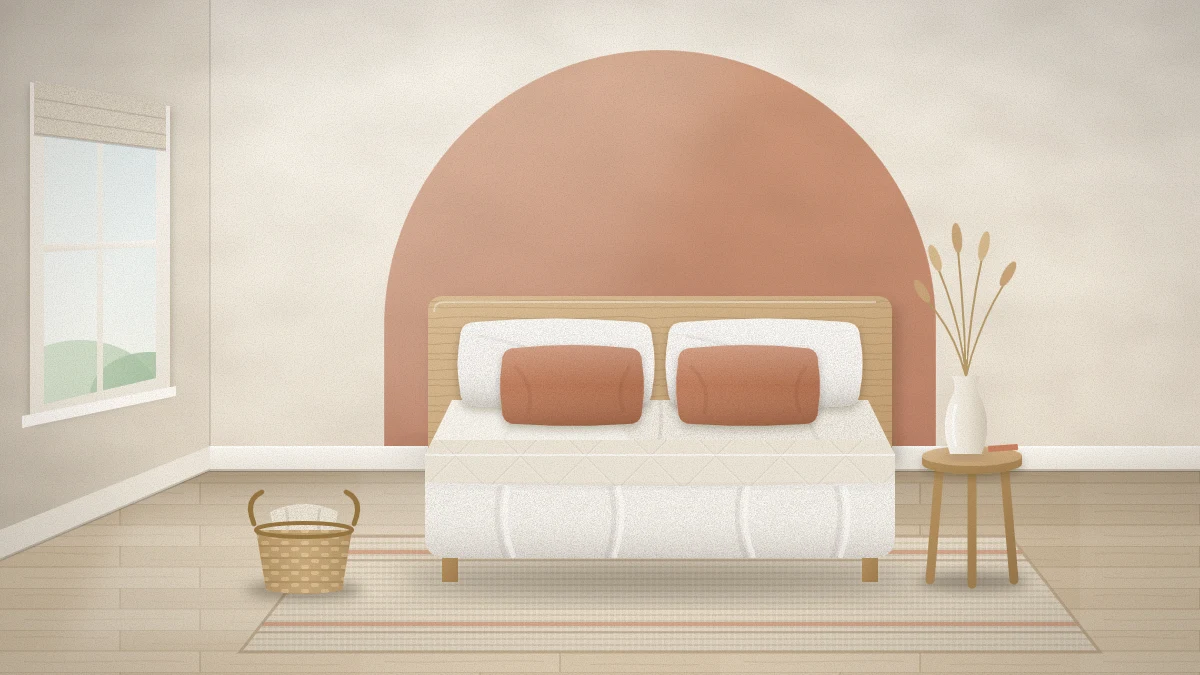
A single shape, a few inches wider than the bed and rising to about 60 in (152 cm) or more, acts as a headboard and an accent at once. It uses very little paint and covers a small area, so it is easy to paint over later.
Removable wallpaper
Peel-and-stick wallpaper brings pattern, which paint cannot. In a small room choose a larger, open pattern with plenty of background showing, since tiny dense prints turn into visual noise from across the room.
Slim picture-frame molding
Thin strips arranged as three or four tall rectangles and painted the same color as the wall add shadow lines without adding color. It is the quietest accent and suits rooms that are already colorful. Treat it as a concept to plan carefully: how the strips are fixed depends on the product and the wall, so follow the manufacturer instructions, and use fixings suited to your wall type.
A fabric hanging
A length of linen, a lightweight quilt or a woven textile hung from a slim rod covers a wide area with color and softness and goes with you when you move. Size it to about two thirds of the bed width or more, so it reads as a wall treatment and not as a small picture.
Safety note
Anything hung above the bed should be lightweight and securely fixed, with hardware rated for the piece and suited to your wall type. Avoid heavy mirrors, heavy shelves and glass-fronted frames directly over the pillows. More options are in the guide to above-bed wall decor.
Effort and reversibility compared
| Treatment | Effort | Reversibility | Best for |
|---|---|---|---|
| Deeper paint tone | Low | Repaint one wall | A calm, tonal room |
| Half wall | Low to medium; needs a level line | Repaint one wall | Widening a narrow wall |
| Arch or block | Medium; needs careful marking | Repaint a small area | Beds with no headboard |
| Removable wallpaper | Medium; patient alignment | Peels off, results vary | Adding pattern |
| Frame molding | High | Lowest; leaves marks to repair | Owners staying put |
| Fabric hanging | Low | Highest; a rod to take down | Renters and frequent movers |
If you rent
Check the lease or ask the landlord before you paint. For removable wallpaper, test a small piece on a hidden spot for a couple of weeks first, and stay within what the product states about surfaces and removal. Some paints and older walls release a layer along with the adhesive, so a clean removal is never certain.
The fabric hanging is the safest route, and a large piece of art leaning on a dresser or a freestanding headboard can do a similar job with no change to the wall at all. There are more approaches of this kind in renter-friendly bedroom decor.
Finish the wall, then stop
Once one wall is the accent, hold back elsewhere. Repeat its color twice in small amounts across the room, in a cushion and a vase or a lamp base, so the wall looks connected to the rest. Keep the other three walls nearly bare. The negative space around the accent is what makes it read as a decision.
Frequently asked questions
Which wall should be the accent wall in a small bedroom?
Usually the wall behind the bed. The bed is already the focal point, the headboard and pillows screen part of the wall so a strong treatment stays balanced, and you face away from it when lying down. Avoid the window wall and the wall broken up by the door.
Does an accent wall make a small bedroom look smaller?
It changes the apparent shape more than the size. A deeper color seems to bring a wall forward, which helps on the short end of a long room and can make a boxy room feel wider. Keeping the accent related to the other wall color prevents the room from looking chopped up.
What is the easiest accent wall for renters?
A large fabric hanging on a slim rod, or oversized art leaned on a piece of furniture, because both leave with you. Removable wallpaper is another option, but check the lease first, test a piece on a hidden spot, and follow what the product states. A clean removal is never certain.