Small Bedroom Decor on a Budget: 12 Low-Cost Updates
Twelve low-cost changes for a small bedroom, ordered by how much visible difference each one makes, using what you own, secondhand finds and fabric remnants.

A small bedroom is the least expensive room in a home to change, simply because there is so little of it: one bed, one window, three or four surfaces. A single new cushion cover is a real share of what you see from the door.
These twelve updates are small bedroom decor on a budget in the plainest sense. They are listed by how much visible difference each makes for the effort involved, so start at the top and stop whenever the room feels right. Most use things you own, secondhand finds or leftover fabric.
Start With the Free Move
1. Rearrange before anything else
Re-center the bed on its wall, or try it on the other wall, and pull the nightstand tight to the mattress. Position changes how the whole room reads from the doorway, which no accessory can do. If you want a full afternoon method for this, follow the steps for refreshing a bedroom with what you already have.
Change the Textiles You See First
2. Swap the pillow covers
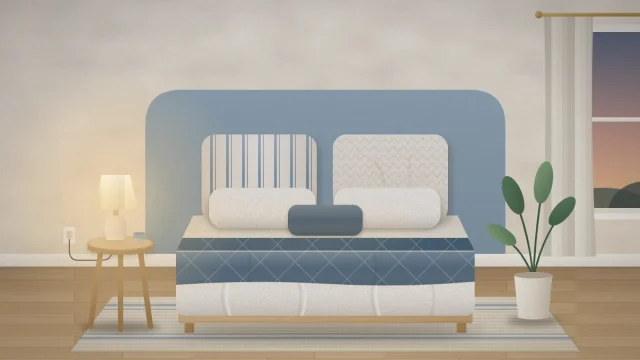
Two covers about 20 in (50 cm) square at the front of the bed sit at the center of the room’s main sightline. Choose one color already present in the room, such as the tone of the rug or a print, and repeat it. Repetition is what makes inexpensive things look planned. For pairings that work, see these bedding color combinations.
3. Add one throw
Fold a single throw into a band about 18 in (45 cm) wide across the foot of the bed. It breaks up a flat expanse of duvet cover with a second texture and a stripe of color, and a cotton or knitted one from a secondhand shop does the job as well as a new one.
4. Rehang the curtains higher
A rod set about 4 to 6 in (10 to 15 cm) above the window frame, or halfway to the ceiling, and extended roughly 6 to 8 in (15 to 20 cm) past each side makes the window look larger and the ceiling taller. Curtains should then reach the floor; let down the hem or sew a band of contrasting fabric to the bottom if they fall short.
Safety note
Moving a curtain rod means new fixings. Use hardware rated for the rod and curtains and suited to your wall type, and follow the manufacturer instructions. If you rent, ask the landlord first, and if you are unsure what is behind the wall, ask a professional.
Warm Up the Light
5. Switch to warm white bulbs
Cool, bluish bulbs flatten colors and make pale walls look gray. Warm white bulbs, matched across every lamp in the room, give fabrics and wood a softer cast in the evening. Check each lamp’s label for the bulb type it accepts. If the only light is on the ceiling, borrow a table lamp from another room and use that after dark.
Give the Walls and Furniture One New Thing
6. Frame something you already own
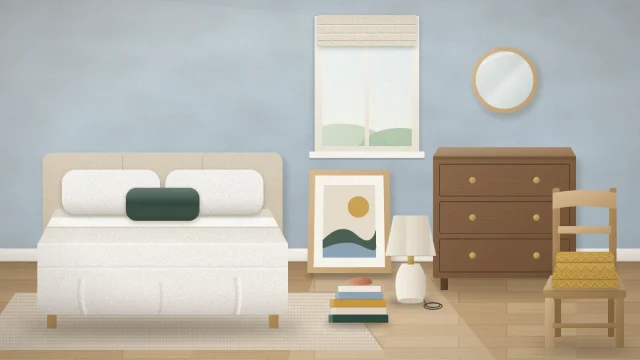
A pressed leaf, a page from a damaged book, a piece of patterned fabric or a child’s drawing looks considered once it sits inside a mat and frame. Secondhand frames are easy to find; paint mismatched ones the same color so they read as a set. Lean the result on the dresser if you would rather not mark the wall, an approach that sits at the center of most renter-friendly bedroom decor.
7. Paint one piece of secondhand furniture
A wooden chair, stool or small chest in a muted color, such as sage, clay or deep blue, becomes the accent of the room. One painted piece is enough, because a second would compete with it. A painted chair can also stand in as a nightstand, and its open legs let the floor show underneath, which keeps a tight corner looking lighter.
Tidy the Surfaces Into Groups
8. Gather small objects on a tray
Five loose items on a dresser read as five things. The same items on a tray, a shallow dish or even a large flat book read as one. Use something from the kitchen cupboard, around 8 by 12 in (20 by 30 cm).
9. Bring in a plant or branches
A tall jar of cut branches, about 24 in (60 cm) high, adds height and an irregular outline to a room made of rectangles. Garden prunings and dried grasses work, and so does a cutting from a houseplant rooted in water.
Make Two Bigger Gestures
10. Cover the headboard with fabric
A tired headboard can be wrapped in a length of heavy fabric, a quilt or a fitted slipcover made from a remnant, tucked firmly behind it. The bed is the focal point, so new fabric here changes more than it costs. If the bed has no headboard at all, there are several DIY headboard ideas that take almost no floor space.
11. Use a large secondhand mirror
Large mirrors with dated frames are common secondhand, and a coat of paint fixes the frame. Stand it beside the window so it reflects daylight across the room. A leaning mirror should be secured against tipping; if you hang it instead, use hardware rated for its size.
Finish by Editing
12. Take a few things off show
Remove about a third of what is on display and put it in a drawer for a month. Fewer, larger objects with negative space between them look more expensive than many small ones, and the things you kept out become easier to see.
Where to Look
- Your own home: lamps, trays, jars, books and throws from other rooms.
- Secondhand shops and yard sales: frames, mirrors, wooden chairs, baskets.
- Fabric remnants: short lengths for pillow covers, curtain bands and headboard wraps.
- Outdoors: branches, dried grasses, leaves to press.
Frequently asked questions
What is the cheapest way to change how a small bedroom looks?
Move the furniture. Re-centering the bed, pulling the nightstand close and clearing the view from the door costs nothing and alters the whole room. After that, new pillow covers and a throw change the bed, which is the largest thing anyone sees when they walk in.
Which single update makes the most difference?
It depends on what is weakest. If the layout is awkward, rearranging wins. If the layout is fine, look at the bed, because it fills most of the view. Two cushion covers in a color repeated elsewhere in the room, plus a folded throw, usually do more than any object on a shelf.
How do secondhand pieces avoid looking mismatched?
Give them one thing in common. Paint frames the same color, keep wooden pieces in similar tones, or repeat a single accent color across a chair, a cushion and a print. Limit yourself to one statement piece, such as a painted chair, and let everything else stay quiet around it.