Small Bedroom Rug Ideas: Size, Placement and Texture
Five rug placements for a compact bedroom, approximate sizes for twin, full and queen beds, and how texture and pattern scale change the way the floor reads.
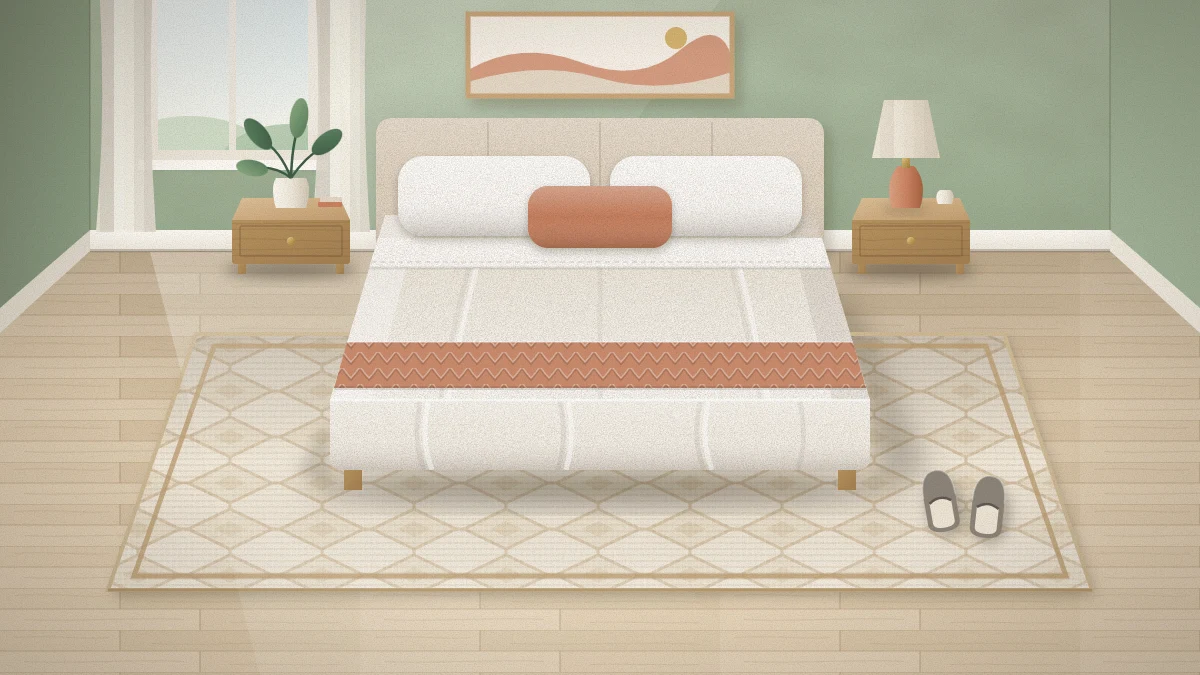
A rug is the piece people most often leave out of a compact room, on the theory that covering the floor makes it look smaller. Usually the opposite happens. A bare floor with a bed parked on it reads as leftover space, while a rug gathers the bed and nightstands into one composed group.
The small bedroom rug ideas below start with the question that matters most, which is where the rug sits in relation to the bed, and then move on to size, texture and pattern.
Why One Generous Rug Beats Several Small Ones
Every edge on the floor is a line the eye stops at. Three little mats beside and below the bed create a dozen edges and chop the floor into patches, so the room feels busier and tighter. One rug large enough to run under the bed and out on both sides makes a single rectangle, and the room is read as that rectangle plus a border of floor.
That border matters. Where you can, leave roughly 8 to 12 in (20 to 30 cm) of bare floor between the rug and the walls. A rug that touches the baseboards looks like badly fitted carpet. A visible frame of floor makes the rug look chosen and hints that the room continues past it.
Five Placements and When Each One Fits
Under the lower two thirds of the bed
This is the default for a bed centered on a wall. Lay the rug crosswise, starting just in front of the nightstands and running out past the foot. The nightstands stay on bare floor, so they sit level, and you step onto something soft on either side. Aim for about 18 to 24 in (45 to 60 cm) of rug showing on each side. In a tight room, 12 in (30 cm) is enough to register.
A runner along one side
When the bed is pushed against a wall, only one side is used for getting in and out. A runner about 2.5 ft (75 cm) wide and close to the length of the bed covers exactly that strip. It also draws a long line from the door toward the far wall, which stretches the room visually.
A rug at the foot
If nightstands, a radiator or a closet door leave no space at the sides, put a rug of about 3 x 5 ft (90 x 150 cm) across the foot, tucked a few inches under the bed frame so it looks anchored. Before you commit, check that dresser drawers still open freely over it; the guide to placing a dresser, desk and chair covers those clearances.
A round rug for a corner bed
A corner bed leaves an L-shaped patch of floor, and a rectangle laid in it tends to look crooked. A round rug about 4 to 5 ft (120 to 150 cm) across, slid partly under the open corner of the bed, softens all those right angles and makes the corner arrangement look deliberate.
A small textured rug over a flat one
Layering adds depth without adding another edge to the bare floor. Start with a flat-woven base rug under the bed, then lay a shaggy or sheepskin-style rug of about 2 x 3 ft (60 x 90 cm) on top, on the side where you get up. Keep both in one color family so the top layer reads as texture. It is one of the simplest details that make a small bedroom feel warm.
Approximate Rug Sizes by Bed Size
These are common rules of thumb, with the rug laid crosswise under the lower two thirds of the bed.
| Bed | Comfortable size | If the room is tighter |
|---|---|---|
| Twin, about 38 x 75 in (97 x 190 cm) | About 5 x 8 ft (150 x 240 cm) | About 4 x 6 ft (120 x 180 cm), or a runner beside the bed |
| Full, about 54 x 75 in (137 x 190 cm) | About 5 x 8 ft, giving roughly 21 in (53 cm) each side | A runner on each side, or a 3 x 5 ft rug at the foot |
| Queen, about 60 x 80 in (152 x 203 cm) | About 6 x 9 ft (180 x 270 cm), giving roughly 24 in each side | About 5 x 8 ft, giving roughly 18 in each side |
Tip
Before buying, mark the rug outline on the floor with painter’s tape and leave it for a day. Open every door and drawer, walk your usual route to the window, and adjust the tape until nothing catches.
Texture: Flat, Low or Deep
Flat-woven rugs in cotton or wool are thin, so doors pass over them and furniture sits level. That makes them the practical choice when the rug runs close to the door.
Low-pile wool is softer underfoot and still looks tidy. Deep pile is visually heavy: across a whole small floor it can make the room look padded and lower, so use it as the small top layer described above. Jute and sisal bring a dry, natural texture, but they are rough on bare feet, so try one first.
Pattern Scale and Color
A rug close in tone to either the floor or the walls keeps contrast low, and low contrast lets the floor read as one calm surface. On a dark floor, a pale rug bounces daylight back up into the room. On a pale floor, a rug one or two shades deeper grounds the bed.
For pattern, choose a medium or large motif in soft contrast, such as a tone-on-tone diamond or a wide stripe. Tiny, busy patterns turn into speckle from standing height and compete with the bedding. In a corridor-shaped room, stripes laid across the width push the long walls apart; the guide to a long narrow bedroom layout shows where that rug should sit. If your duvet cover is patterned, keep the rug plain, and the other way around.
The Practical Details: Pad, Doors and Edges
- Use a non-slip rug pad. Cut it about 1 in (2.5 cm) smaller than the rug on every side. It stops the rug creeping and keeps the corners flat, which matters most on a route you walk in the dark.
- Keep door swings clear. The bedroom door and any closet door should either miss the rug entirely or glide over it.
- Leave vents and heaters uncovered. Do not lay a rug over a floor vent, and keep it clear of radiators and space heaters.
- Route cords along the wall. A lamp cord should never run under a rug.
Frequently asked questions
Can a very small bedroom have a rug at all?
Yes. Even a room that barely fits the bed can take a runner along the open side or a small rug across the foot. The aim is one clear shape on the floor instead of several mats, with doors still swinging freely and a little bare floor left visible around the edges.
Should the rug go under the nightstands?
In a small room it usually works better to stop the rug just in front of the nightstands. They sit level on the bare floor, the rug does not need to be as large, and you still get a soft strip to step onto on each side of the bed.
Is a light or dark rug better in a small bedroom?
Either can work if the contrast with the floor stays gentle. A pale rug on a dark floor reflects daylight and brightens the room. A rug slightly deeper than a pale floor grounds the bed. Strong contrast draws a hard outline, which makes the rug look smaller and the floor more broken up.