Dark Colors in a Small Bedroom: When Moody Works
Why a deep wall color can suit a small bedroom, the conditions where it fails, and how to balance it with matte paint, pale bedding, wood, brass and warm lamps.
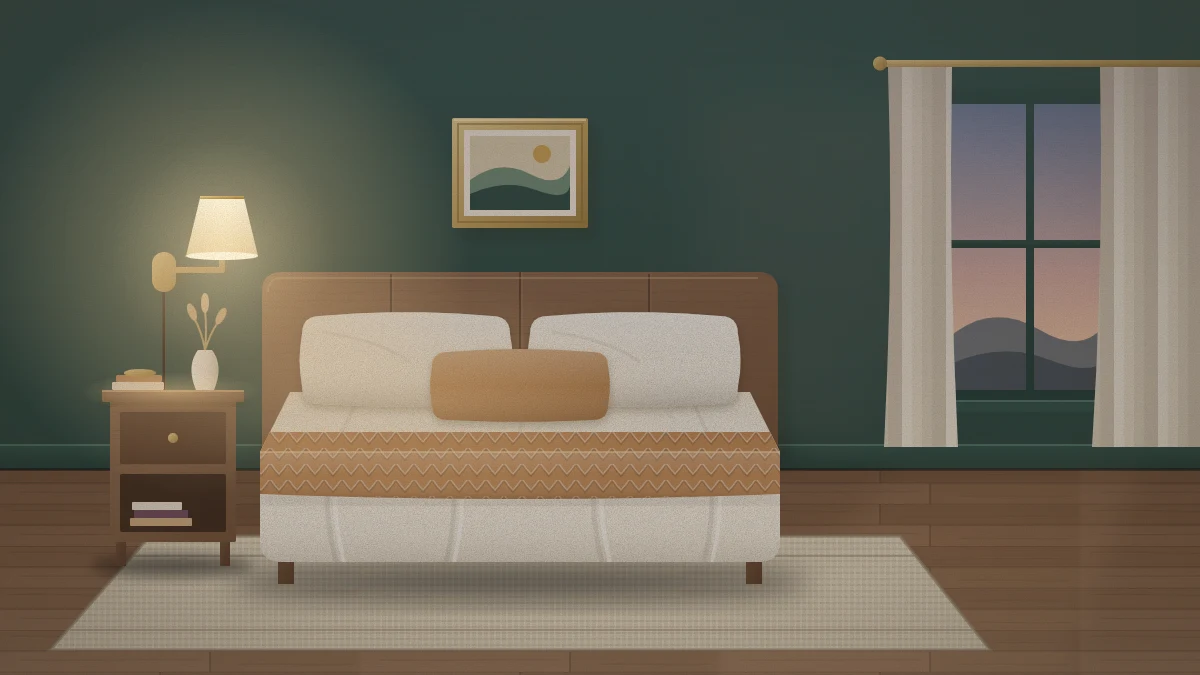
“Small rooms must be white” is advice about making a room look as large as possible. That is a reasonable goal, but it is not the only one. A bedroom is used mostly in the evening, with lamps on and the curtains closed, and in those conditions a white box can look flat while a deep green or inky blue looks rich and enclosing.
Using dark colors in a small bedroom is a trade: you give up the bright, airy reading of the room and gain depth and a sense of shelter. The trade pays off under certain conditions and fails under others, and it helps to know which before you open a can of paint.
Why a deep color can work in a small room
You judge the size of a room largely from its corners and edges, the lines where wall meets wall and wall meets ceiling. Pale paint shows every one of those lines as a crisp shadow. A deep matte color absorbs light, so the shadows in the corners merge with the wall color and the edges become hard to find. The walls seem to fall back because the eye can no longer pin down exactly where they are.
The room does not look bigger in the usual sense. It looks less defined, and many people find that pleasantly enclosing in a room meant for rest.
When it fails
The combination that goes wrong is little daylight plus high contrast. Deep walls with bright white trim, a white ceiling and a white door outline every edge of the room in the strongest possible way. Instead of blurring the box, the paint draws a diagram of it, and the room looks smaller and choppier than before.
Other warning signs:
- One small north-facing window and a room used mainly by day, for example as a home office too.
- A single cool-white overhead light and no lamps. Dark walls under flat cold light turn gray and dull.
- A glossy finish on uneven walls, which shows every dent and roller mark.
- Many small, mismatched pieces of furniture. Against a dark wall each becomes a separate pale shape.
Color-drench: walls and trim in one tone
The fix for the contrast problem is to paint the baseboards, window trim, door frame and door in the same color as the walls. This is often called color-drenching. With no white outline, the walls read as one continuous surface, and a small room stops being divided into panels.
A slightly higher sheen on the trim than on the walls is a common choice because trim gets handled more; the color stays the same, and the small difference in shine is enough to give the woodwork definition. If you rent, get permission before painting anything, trim included.
Choose a matte finish
On dark walls, sheen matters more than it does on pale ones. A shiny dark surface reflects lamps and windows as bright patches, which breaks up the color and exposes flaws in the plaster. A matte or flat finish scatters light evenly, so the color looks deep and velvety from every angle.
Test before you commit. Paint a sample about 2 ft (60 cm) square on two different walls, or on a board you can move, and look at it in the morning, at dusk and under your lamps. Deep colors shift more than pale ones: a green can go nearly black at night, and a navy can turn purple in warm light.
Keep the ceiling in mind
The ceiling is the fifth wall, and it decides how enclosed the result feels. There are three options:
- Same color as the walls. The strongest effect. The line between wall and ceiling vanishes, which suits a ceiling of about 8 ft (2.4 m) or higher and anyone who wants the full enclosed look.
- A lighter tint of the wall color. A softer step than white, with no hard line, and it keeps some reflected light. A safe middle choice for a low ceiling.
- Warm off-white. Keeps the most light but brings the contrast line back. Soften it by choosing a creamy white instead of a bright cool one.
Balance the dark with pale, warm and reflective things
A dark room needs relief, and in a small bedroom the bed supplies most of it. Pale bedding in ivory, oatmeal or soft white puts a large light shape in the middle of the room and bounces lamp light back up onto the walls. A caramel or rust throw adds warmth without adding another dark surface.
Then bring in materials that glow instead of colors that shout:
- Wood. Walnut, oak or any mid-toned wood looks warmer against green, blue or charcoal than it does against white.
- Brass and gilt. A brass lamp, a thin gilt frame or brass hardware catches light as small bright points. Two or three are enough.
- Warm lamp light. Dark walls absorb light, so plan on more sources, not brighter ones: two bedside lamps and a third across the room, all with warm white bulbs and fabric shades. Light aimed at a wall shows off the color best. The small bedroom lighting guide covers plug-in options.
- A mirror. Placed to catch the window, it returns some of the daylight the walls take away.
Tip
Muted, slightly grayed colors are easier to live with than pure ones. Forest green, deep olive, ink blue, aubergine, chocolate brown and charcoal with a warm undertone all sit well with wood and linen. For how deep tones fit into a full palette, see small bedroom color ideas.
Lower-commitment routes
If painting the whole room feels like too much, or the lease rules it out, there are two smaller steps.
One deep wall
Paint only the headboard wall. You get a dark backdrop for pale bedding and the wall seems to recede behind the bed, while three pale walls keep the daylight. The choice of wall and treatment is covered in the guide to a small bedroom accent wall.
Deep textiles only
Leave the walls pale and put the dark color into things you can take with you: a deep green velvet headboard cover, charcoal linen curtains, an ink-blue duvet cover or a dark area rug. Start with two of these, not all four. Curtains and a headboard in the same deep tone on a pale wall already give the room a moody anchor, and living with them for a month is a fair test of whether you want that color on every wall.
Frequently asked questions
Do dark colors make a small bedroom look smaller?
Not necessarily. A deep matte color hides the corners, so the walls can seem to recede. The room tends to look smaller when dark walls are outlined by bright white trim and ceiling, or when there is little daylight and only one cold overhead light.
What is the best paint finish for dark bedroom walls?
A matte or flat finish is the usual choice. It spreads light evenly, so the color looks deep and surface flaws are less visible. Glossier finishes reflect lamps and windows as bright patches and tend to show dents and roller marks on a dark wall.
Should the ceiling be dark too?
It depends on ceiling height and how enclosed you want the room to feel. Matching the walls gives the most seamless result and suits ceilings of average height or higher. A lighter tint of the wall color is a gentler option for a low ceiling, and a creamy off-white keeps the most light.